
Дата публікації:
03.02.2026
How the Reverse Auction Stage Works in Commercial Procurement
A reverse auction is one of the stages for conducting procurement in an electronic format, usually taking place after proposals have been collected. The auction in procurement is a mechanism for ensuring competition, during which suppliers who have submitted proposals for the procurement place lower bids.
General Information
The auction takes place in rounds. During one round, suppliers take turns placing bids. An auction in commercial tenders lasts a minimum of 3 and a maximum of 30 rounds. The auction concludes either automatically after the 30th round, or earlier (but not before the 3rd round) if no supplier has lowered their bids for 2 consecutive rounds.
If the auction takes place on the day following the end of the proposal submission period, and if 6 or more participants submitted a proposal to the tender, the system will reschedule the auction to the interval between 10:00 and 12:00.
Each participant’s turn in a round lasts 2 minutes. The duration of a round depends on the number of participants. The more participants there are, the longer the round will last. For example, if there are 2 participants in the auction, the round will last 4 minutes, and if there are 5, it will last 10 minutes.
How the Auction is Scheduled
The start time of the auction is automatically scheduled after the end of the proposal submission, but the time differs depending on the type of procurement.
In a simple tender:
- if the proposal submission ends before 15:30, the auction begins half an hour later.
- if the proposal submission ends after 15:30, the auction is scheduled for the next business day with a specific time indicated.
In a two-stage tender, the auction is scheduled for the next business day after the end of the prequalification period with a specific time indicated.
Also note: if the system automatically schedules the auction for the next business day after 12:00, and 6 or more participants submit proposals for the procurement, then after the end of the proposal submission, the auction time is rescheduled to the 10:00, 11:00, or 12:00 slots.
In What Cases the Auction Does Not Take Place
If only one participant has submitted a proposal, the procurement skips the electronic auction stage and automatically moves to the “Qualification” status.
If no participant has submitted a proposal, the system automatically changes the procurement status to “Did not take place”.
How the Reverse Auction Takes Place
To start working with the auction, a supplier needs to follow the link from the procurement page. It is recommended to do this 5-15 minutes before the start time.
Before the auction, familiarize yourself with the minimum price reduction step for the proposal, which the customer specifies when publishing the procurement announcement. The proposal price during the auction can be left unchanged or lowered relative to YOUR previous bid—by the auction step or more. A participant can lower the price in any round or in none at all.
The auction page displays the time until each next action—until the start of the auction, the next participant’s bid, and the completion.
For the first 5 minutes after the auction starts, no supplier places a bid. This is time to review the price proposals of other participants.
The customer and participants cannot see the names of other participants until the auction is over and distinguish them by numbers: “Participant #1,” “Participant #2,” and so on. Participants themselves can only identify their own proposal (marked “You”) and have the opportunity to adjust it by lowering the price.
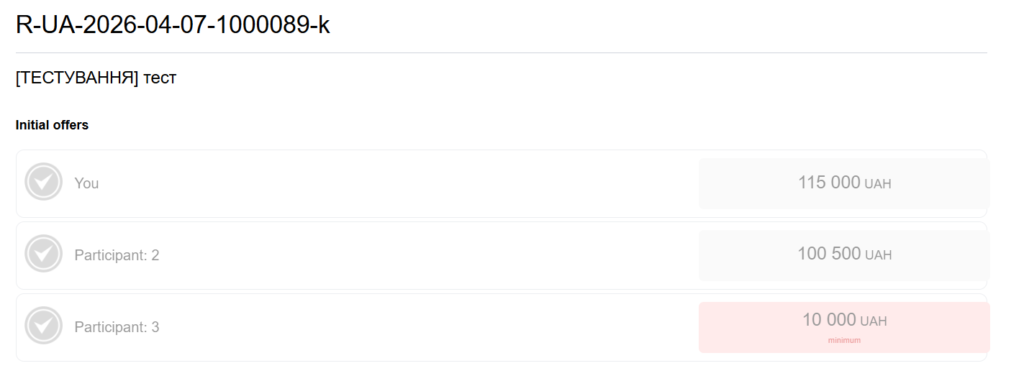
Before the first round of the auction, the initial bids are displayed on its page. The participant with the highest proposal amount bids first, and the one with the lowest bids last.
As soon as it is a participant’s turn to bid, a field for entering the proposal price will appear at the bottom of the screen. The system will prompt what the minimum possible price reduction is, considering the auction step. The bid can be lowered to the specified amount or less, or left unchanged. To leave the bid unchanged, you can skip the move.
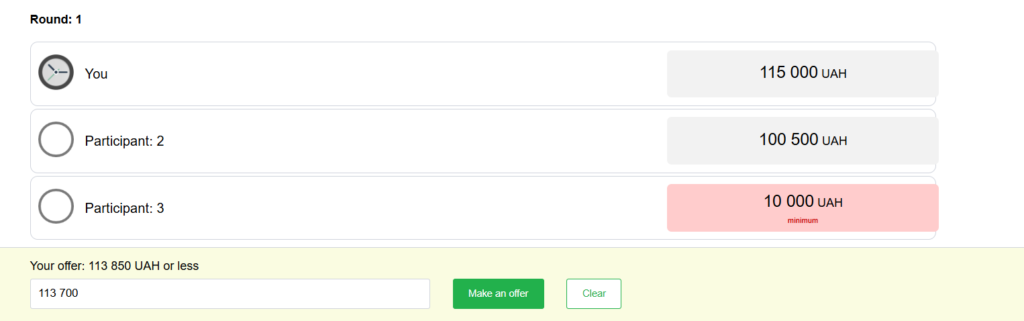
Before the time allotted for the move is over, the bid can be changed or withdrawn. However, after publication and the move passes to the next participant, the bid cannot be changed. In case of an error, it will be impossible to raise the bid in the next round.
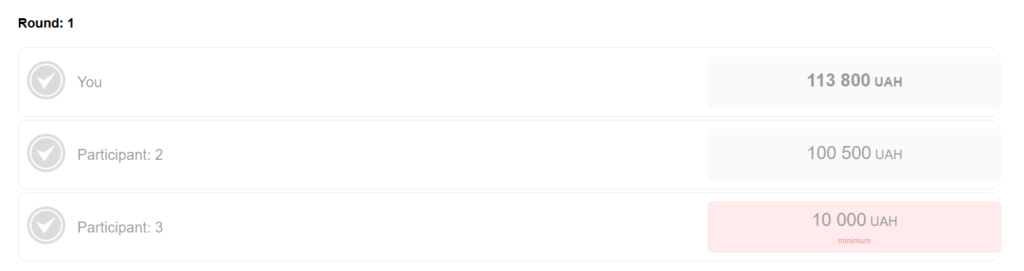
After each round is completed, all participants’ bids are displayed, with changed bids and the minimum bid highlighted.
How the Auction Stage Ends.
The minimum number of rounds is 3. If none of the participants changed their price proposals in the second and third rounds, the auction will end after the third round.
The maximum number of rounds is 30. However, the auction will end earlier if (after three mandatory rounds) none of the participants change their bids for 2 consecutive rounds.
The procurement moves to the qualification stage.
Reverse Auction with Hidden Prices.
The algorithm for conducting a reverse auction with hidden prices is the same as a regular auction. The only difference is the absence of displaying participants’ bids.
Instead of bids, Place 1, Place 2, etc., will be indicated, where Place 1 means the lowest bid.
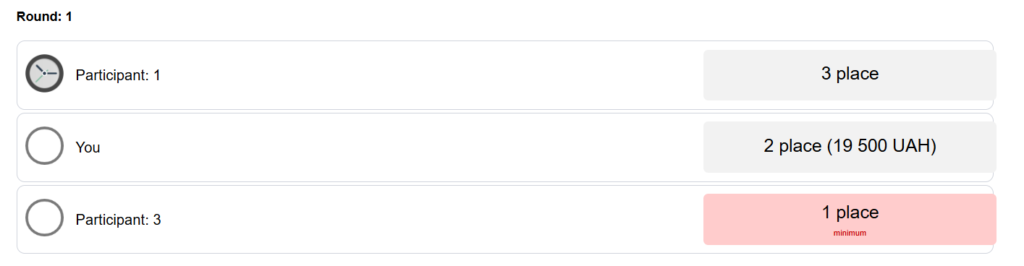
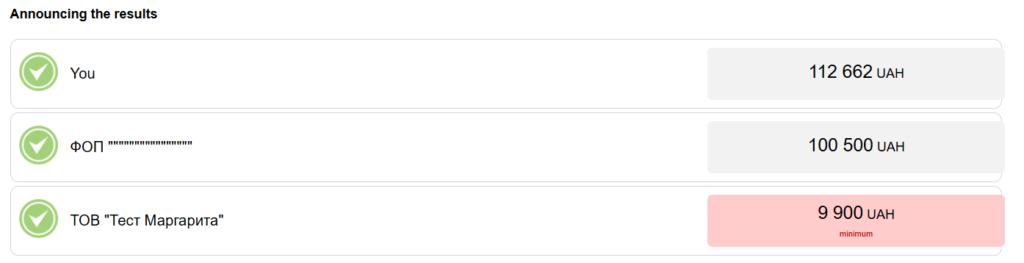
After the auction is completed, all bids will be disclosed to both the customer and all participants.
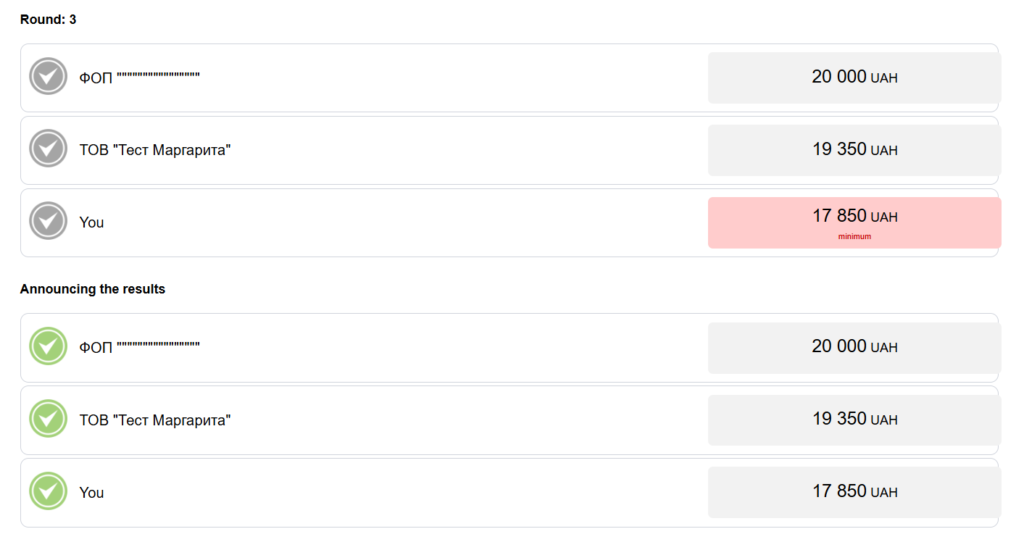
That’s all. We wish you successful participation in procurements on the Zakupivli.Pro platform


Коментарі (0)